⚠ Important — Please Read Before Visiting
NorfolkWild guides are provided for general information only. You are solely responsible for your own safety. Always carry out your own research before exploring any beach or cliff area.
✓ Check
tide times before any beach visit on this coast
✓ Never approach or stand beneath active cliff faces
✓ The cliffs here are among the fastest-eroding in Europe
✓ Report significant finds rather than removing them
No Liability — NorfolkWild and its authors accept no responsibility or liability whatsoever for any loss, injury, accident, death, damage, delay or inconvenience suffered by any person as a result of following any guide, route, advice or information published on this website. Coastal conditions change constantly. By visiting any site on this coast you do so entirely at your own risk. In an emergency dial 999.
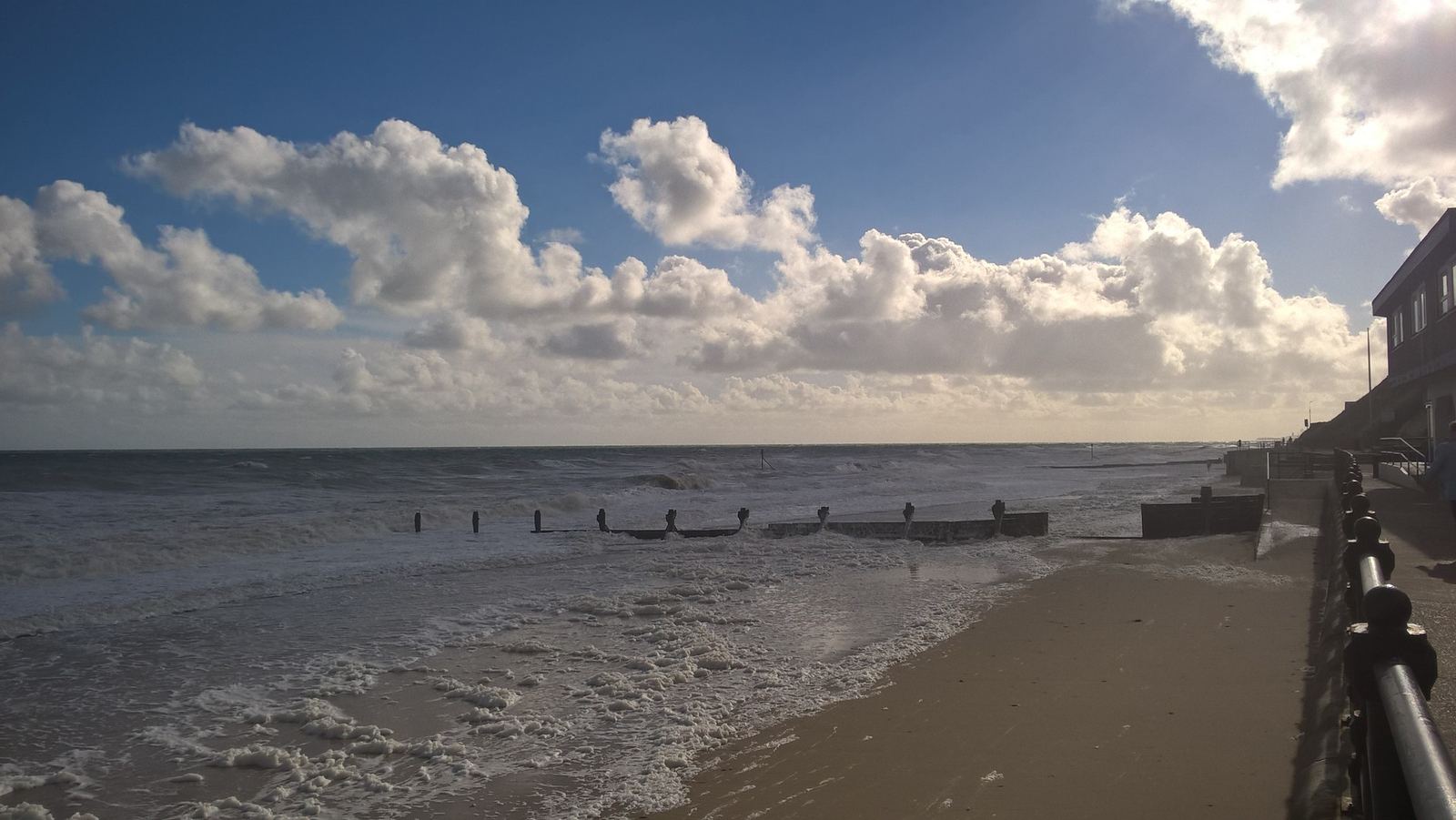
Between Weybourne and Happisburgh lies one of the most scientifically important stretches of coastline in Europe. As the cliffs here crumble into the sea — among the fastest-eroding in the country — they reveal fossils, footprints and tools left by mammoths, ancient rhinos, and humans who walked this land hundreds of thousands of years before recorded history began. This is the Deep History Coast.
🦶Oldest footprints
~850,000 yrs
🦣Mammoth find
1990, West Runton
🔍Fossil finds
20,000+ a year
Why This Stretch of Coast Matters
North Norfolk's Deep History Coast is the 22-mile stretch between Weybourne and Cart Gap, just south of Happisburgh, that has produced some of the most significant prehistoric discoveries anywhere in Britain. The reason lies in the geology: the cliffs here are formed largely of the Cromer Forest-bed, a layer of ancient river and estuary sediment laid down between roughly 500,000 and 2 million years ago, when this part of England looked nothing like it does today.
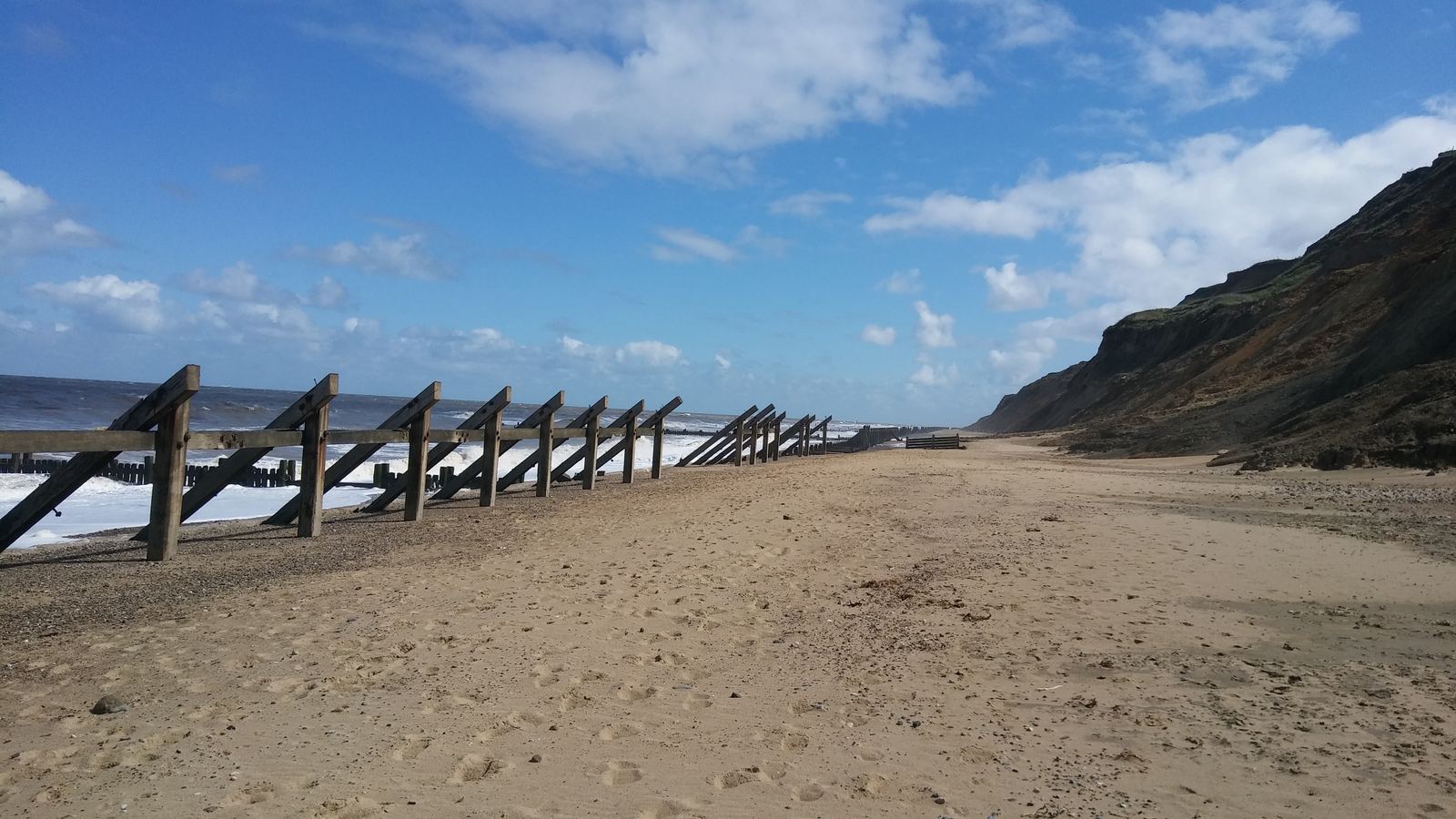
Crucially, this coastline is also retreating fast — among the most rapidly eroding in Europe. That is both the tragedy and the gift of the Deep History Coast. Ancient material is being destroyed by the sea, but the same erosion constantly exposes fresh fossils, bones and artefacts that would otherwise remain buried forever. Scientists and fossil hunters are, quite literally, racing the tide.
"As soon as a find appears, it can be worn down or buried again within days. The whole Deep History Coast is a race against time between discovery and the sea."
A Timeline of Deep Time
~2 million
years ago
The Cromer Forest-bed begins forming
Long before the Ice Age, this area was part of a vast river system — an ancient course of the Thames flowed through what is now Norfolk, joining a river called the Bytham. Forests, floodplains and estuaries here built up the layers of sediment that would eventually become the cliffs we see today.
~850,000–
950,000 yrs
The Happisburgh footprints
A set of footprints made by a small group — likely adults and children — walking along an ancient estuary, almost certainly an early course of the River Thames. Discovered in May 2013 after storm waves stripped away covering sand, the prints were recorded using 3D photogrammetry before being destroyed by the tide within two weeks. Estimates of their age vary by source between roughly 800,000 and 950,000 years, making them among the oldest evidence of human presence anywhere outside Africa. The species responsible is most likely Homo antecessor, an early human ancestor that predates our own.
~600,000–
700,000 yrs
The West Runton Mammoth
A storm in 1990 began exposing the bones of an enormous steppe mammoth at West Runton beach. Excavated in stages through the 1990s, the skeleton proved to be around 85% complete — the most complete example of its kind ever found anywhere in the world. Standing roughly 4 metres at the shoulder and weighing an estimated 10 tonnes, it remains the largest and most studied mammoth skeleton discovered in Britain.
Various
periods
Rhinos, hyenas, wolves and bears
Ongoing erosion along this coast has revealed the bones of woolly and ancient rhinoceros, hyenas (including fossilised hyena dung containing chewed mammoth bone), wolves, bears, giant deer and other now-extinct megafauna that once roamed this part of England when the climate and landscape were utterly different.
~7,500
years ago
Doggerland disappears
For most of human prehistory, Britain was not an island. A landmass known as Doggerland connected what is now Norfolk to the European mainland. Rising sea levels at the end of the last Ice Age gradually flooded this land, finally severing the connection and creating the North Sea as we know it today. The drowned landscape of Doggerland lies beneath the waters just off this coast.
Why the dates vary
You'll see slightly different figures quoted for the Happisburgh footprints across different sources — anywhere from around 800,000 to 950,000 years. This isn't sloppy reporting; sites this old are too ancient for radiocarbon dating, so scientists rely on a combination of magnetic stratigraphy and fossil evidence (particularly vole teeth) to estimate age, which inevitably produces a range rather than a single precise figure.
What You Might Find
More than 20,000 fossil finds are recorded along this coast every year, and you don't need to be a professional palaeontologist to find something genuinely old. Most finds are modest but real pieces of deep time washed out of the cliffs and onto the beach.
Belemnites
Bullet- or finger-shaped fossils from an extinct relative of squid that lived during the Jurassic and Cretaceous periods, roughly 66 to 201 million years ago — far older than the mammoths, having arrived in these sediments as glacial erratics carried from elsewhere.
Common on most Deep History Coast beaches
Mammoth and rhino bone fragments
Teeth, bone fragments, jawbones and deer antlers continue to be found as the coast erodes — the West Runton Freshwater Bed in particular remains a productive site for ice age mammal remains.
West Runton beach especially
Flint hand axes
Stone tools shaped by early humans, some dated to around 500,000–800,000 years old, have been found along this stretch — including one remarkable axe from nearby West Tofts carefully shaped around a fossil scallop shell.
Happisburgh area, rare finds
Ammonites and sea sponge impressions
Older marine fossils, some originating from much older Jurassic-era rock transported here by glaciers during the Ice Age, rather than forming locally — a reminder that this coast preserves multiple, very different chapters of deep time layered on top of one another.
Happisburgh beach
⚠️ Safety first: Never approach, stand beneath or attempt to climb the cliff face at any point along this coast. The clay cliffs are unstable and can collapse without warning — cliff falls have caused fatalities on eroding coastlines. Always explore the beach from the waterline side, not from above. Check tide times before descending to any beach and always leave yourself a safe exit route. If you find something significant — a bone, tooth, worked flint, or anything that looks deliberately shaped — photograph it in place, note the exact GPS location and report it to the Deep History Coast project (deephistorycoast.org.uk) or the Museum of Norwich. Removing significant finds destroys the scientific context that makes them valuable.
Key Sites to Visit
West Runton Beach
Site of the famous West Runton Mammoth discovery and still one of the most productive fossil-hunting beaches on this coast. Finds frequently wash onto the beach below — explore the beach at low tide using the proper beach access paths only, never approaching or descending the cliff face. Covered in detail in our Sheringham to Cromer walk guide. Access the beach only via designated safe paths — never descend or approach the cliff face directly.
Read the full walk guide →
The Cliffs Between Overstrand and Trimingham
Some of the fastest-eroding cliffs in Europe, losing on average around a metre a year. The dramatic and slightly melancholy landscape here — including the site of Sidestrand's medieval church tower, which finally fell into the sea in 1916 after decades of erosion — is a powerful, visible demonstration of exactly the erosion process that exposes the area's prehistoric treasures.
Read the full walk guide →
Happisburgh
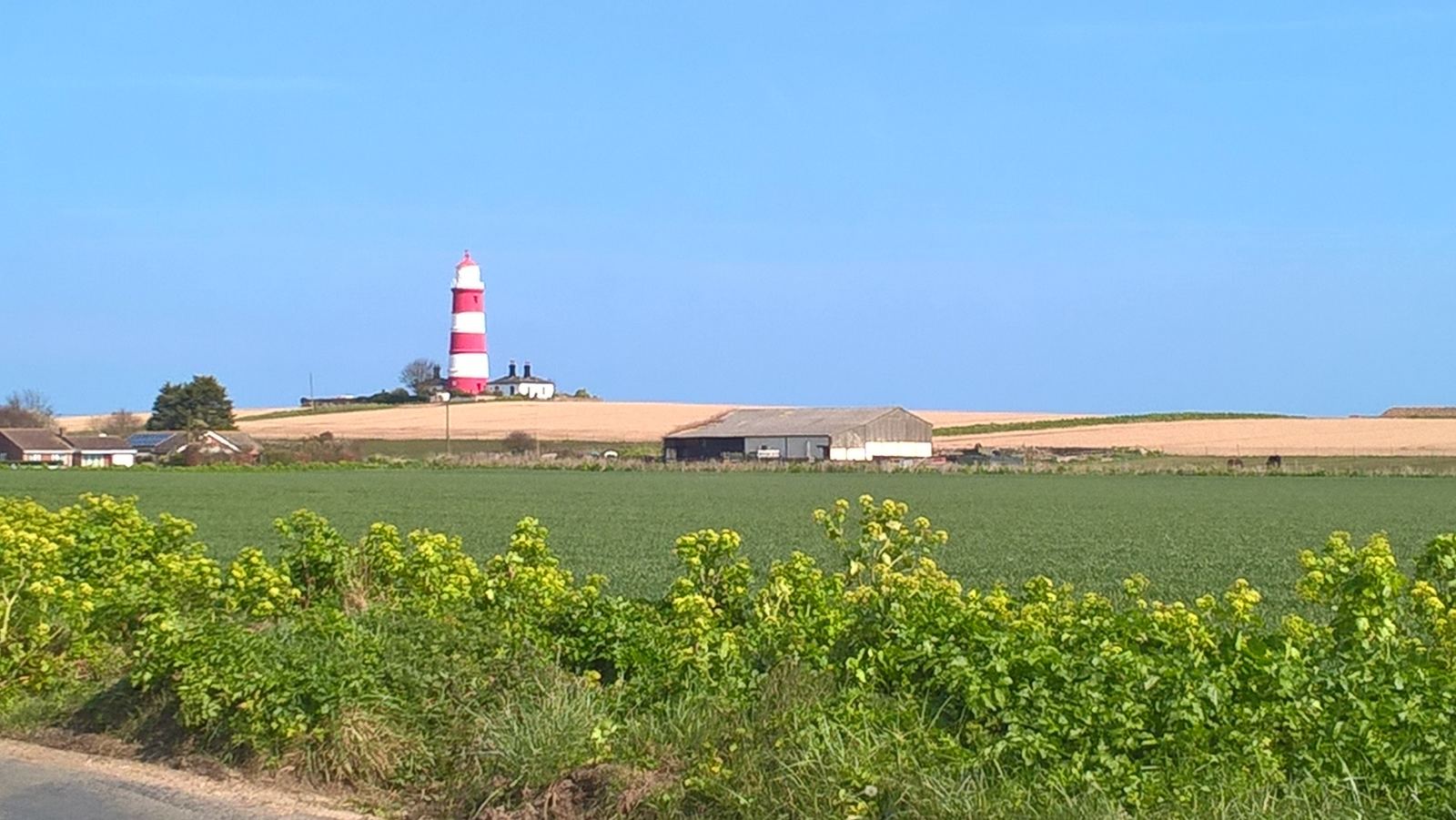
The single most important site on the Deep History Coast — where the famous footprints, the oldest human footprints outside Africa, were discovered in 2013. Also home to a distinctive red-and-white striped lighthouse and a beach that continues to give up new archaeological material with every storm.
See our nearby Mundesley to Walcott walk →
Norfolk County Council publish an official "Happy Valley" route (PDF + interactive map, 1.5 miles) — a clifftop path through the Deep History Coast, looping back through farmland to Happisburgh.
The Deep History Coast App
North Norfolk District Council runs a free Deep History Coast app and a network of "Discovery Points" with interpretive signage along the trail from Weybourne to Cart Gap. The app uses augmented reality to bring extinct animals and Doggerland's lost landscape to life on your phone screen as you walk, and includes a simple fossil identification feature to help you work out what you've found. It's well worth downloading before a visit, particularly if you're bringing children — there are games and a "collector's journal" feature aimed at younger visitors.
What to Bring
🥾
Waterproof Walking Boots
Beach and cliff-base walking on this coast often means uneven shingle and wet sand. Decent boots make fossil hunting considerably more comfortable.
Read Our Boots Guide →
📱
A Fully Charged Phone
Essential both for the Deep History Coast app and for photographing any finds in situ before reporting them — the GPS-tagging feature in the app is genuinely useful for recording exact locations.
📖
Fossils of the Chalk — British Geological Survey
The standard reference guide for identifying chalk and flint fossils found on Norfolk beaches — covers belemnites, echinoids, ammonites and bivalves found along this coast. Authoritative and clearly illustrated.
★ Find on Amazon →
📖
Fossil Hunting in Britain — David Ward
A comprehensive guide to fossil hunting sites across Britain, with a dedicated chapter on the East Anglian coast. Covers where to look, what to look for, how to safely extract and clean finds, and how to report significant discoveries. Essential reading before a fossil hunting visit.
★ Find on Amazon →
📖
Collins Gem Fossils
The pocket guide that fits in a jacket pocket — small enough to carry on the beach, with colour photographs covering the most common British fossil types. An ideal first guide for families and younger fossil hunters.
★ Find on Amazon →
🌿
NorfolkWild
Independent guide to North Norfolk's coast and countryside. Updated June 2026.